
Views: 0 Author: Site Editor Publish Time: 2025-11-25 Origin: Site


Many users are surprised when they open aluminum paste containers because they find a clear liquid on top and a layer of precipitated pigment at the bottom.
Is this separation normal? Will it affect product quality? What causes this phenomenon?
This guide will explain the causes of aluminum paste separation, what situations are normal, what situations are abnormal, and how manufacturers and end users should respond, in concise and professional language.
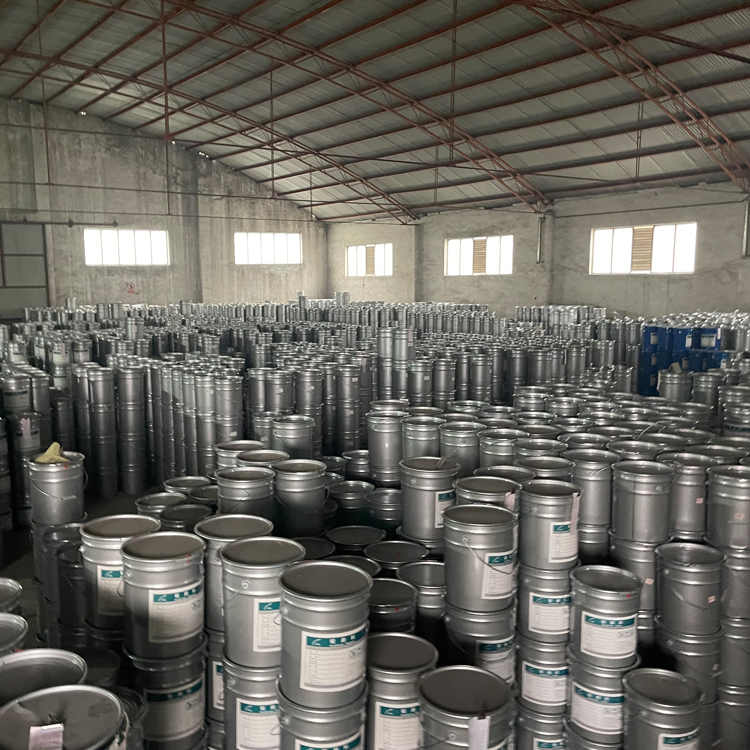
Separation in aluminum paste is a common physical process caused by density differences between aluminum flakes and the solvent or carrier medium.
Because aluminum flakes are heavier, they naturally settle over time.
This is normal sedimentation, not a sign of product failure.
Density difference between solids and liquid
Storage time too long
Temperature fluctuations
Vibration during transportation
Low-viscosity solvents
High solid content pigments
Most high-performance aluminium pastes — including leafing, non-leafing, and resin-coated types — undergo some degree of settling.
Aluminum has a much higher density than mineral oils, esters, or solvents used in aluminium paste.
Heavy flakes gradually sink
Light solvent floats to the top
The mixture appears “layered” or “separated”
This is a physical behavior, not a chemical reaction.
No — as long as the paste can be stirred back to uniformity without clumps or hard sediment.
Even high-quality aluminium paste can show faster layering under poor storage conditions.
High temperatures → lower viscosity → faster settling
Low temperatures → thickening → uneven distribution
Frequent temperature swings → destabilize the suspension
Long-term storage (6–12 months+) → unavoidable sedimentation
This is why suppliers recommend storing aluminium paste at 5–35°C, away from sunlight and moisture.
Different aluminium paste formulations behave differently.
Solvent type
Particle size
Leafing vs. non-leafing structure
Resin-coated vs. uncoated flakes
Solid content (high solids = faster settling)
Example:
Resin coated aluminium paste has better suspension stability because the resin layer improves compatibility with the carrier medium.
| Situation | Normal | Needs Attention |
|---|---|---|
| Clear liquid on top | ✔ Normal | — |
| Soft sediment that stirs easily | ✔ Normal | — |
| Hard sediment at the bottom | — | ✔ Could indicate expired product |
| Lumps that do not disperse | — | ✔ Moisture contamination or oxidation |
| Strong odor change | — | ✔ Solvent degradation |
Easy to stir
No chemical reaction
Metallic effect unchanged
Sediment becomes solid
Color performance deteriorates
Gas generation or swelling occurs (moisture reaction)
Silver Rocket provides moisture-stable, corrosion-resistant aluminium paste designed to minimize these risks.
No. Most separation is normal and caused by density differences.
Use a mechanical stirrer or slow-speed paddle until uniform. Avoid high-speed dispersing.
Only if the paste cannot be fully re-dispersed. Otherwise, performance remains normal.
More solids → heavier mixture → faster sedimentation.
Proper storage, resin-coated grades, optimized viscosity, and stable formulation.
Separation in aluminium paste is a normal physical phenomenon, not a quality problem. Understanding sedimentation, storage conditions, and formula differences helps users handle aluminium paste correctly and avoid production issues.
If you need high-stability aluminium paste, resin-coated aluminum pigments, or customized formulations, Silver Rocket Metallic Pigment Co., Ltd. can provide expert solutions tailored to your industry.
Email: info@silverocket.com
Website: https://www.silverocket.com/