
Views: 0 Author: Site Editor Publish Time: 2025-10-22 Origin: Site


From ancient artisanship to modern industrial marvels, the journey of aluminum paste is a story of continuous innovation and adaptation.
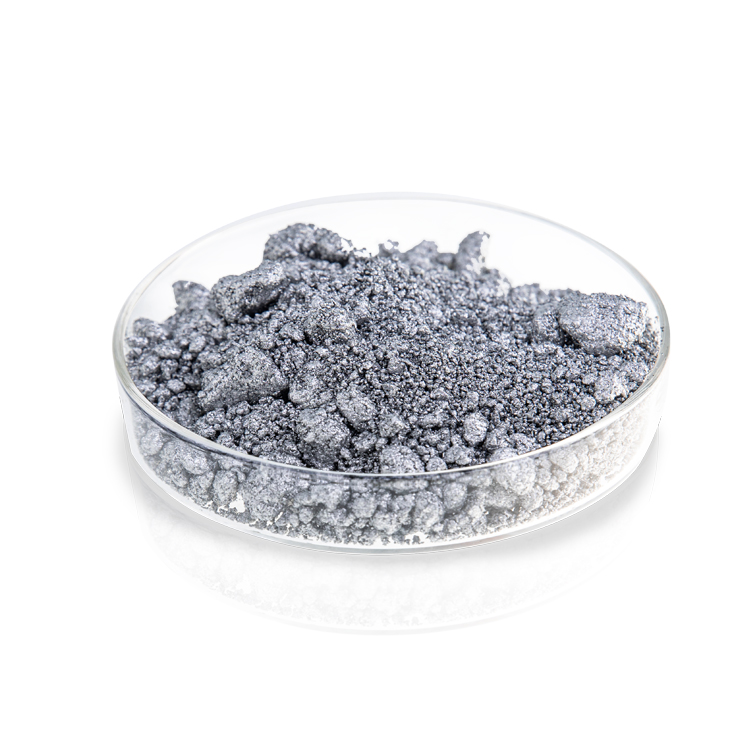
The story of metallic pigments stretches back centuries. Ancient Egyptian artisans hammered gold into thin foils and used the resulting fragments mixed with natural oils for decorative purposes, a technique that later transferred to silver and, eventually, to aluminum after its successful extraction .
The industrial production of aluminum pigments began in Europe during the Renaissance with the mechanical stamping method, where a rigid hammer pounded aluminum blocks into flakes on a steel plate . This was a low-efficiency, high-risk process prone to explosions and inconsistent results .
A pivotal turn came in 1894 when Germany's Hamtag introduced the dry ball milling process, using a ball mill filled with steel balls, aluminum scraps, and lubricants in an inert gas atmosphere to produce flake aluminum powder . This "dry法" (dry method) was a significant step forward, though challenges with safety and control remained.
The true breakthrough arrived in 1910 when American J.Hall invented the wet ball milling process . By replacing inert gas with petroleum solvents, he created a safer, more efficient system that produced aluminum paste in a slurry form . This "wet法" (wet method), later refined in 1930 by Professor E.J. HALL, who utilized a rotary ball mill to extend and crush aluminum into fine flakes within a solvent medium, drastically reduced explosion risks and improved product quality and yield . This method became the industry standard for metal pigment production.
The application of aluminum paste exploded in 1934 when the Chrysler Corporation first used it in automotive coatings . This catalyzed a wave of technological advancement. Today, over 50% of cars globally utilize metallic flash paint containing aluminum pigments, with the figure exceeding 75% in the United States .
Aluminum paste isn't chosen just for its beauty; its physics are remarkable. The pigment consists of tiny, flat aluminum flakes. When incorporated into a coating, these flakes align in parallel, overlapping layers . This structure grants it several key properties:
Exceptional Opacity and Hiding Power: The flakes form a continuous metallic film that effectively covers the underlying material .
Physical Barrier Protection: The multi-layered, overlapping arrangement blocks micro-pores in the coating, preventing moisture and gases from penetrating and protecting the substrate .
Optical Brilliance: The clean surface of the flakes reflects 60-90% of visible, UV, and infrared light, creating a bright, silvery-white shine .
The "Dual-Color Effect": In coatings with transparent pigments, the metallic luminance and color depth change fascinatingly with the viewing angle and incident light, creating a dynamic visual effect .
The latter half of the 20th century saw the rise of specialized global manufacturers like Germany's ECKART, the United States' Silberline, and Japan's Toyo Aluminium . These companies drove the development of high-grade pastes for automotive, plastic coatings, and other advanced applications.
China's aluminum paste industry, starting in the 1950s, experienced rapid growth, particularly from 2005-2014, with an average annual growth rate of over 15% . Domestic enterprises quickly expanded, breaking the monopoly of foreign firms and establishing China as a major global production and consumption hub .
A critical contemporary shift has been towards environmental sustainability. The industry has progressively moved from solvent-based systems to innovative, low-VOC (Volatile Organic Compound) and water-based alternatives . Silver Rocket has been at the forefront of this transition, investing heavily in R&D to create high-performance, environmentally compliant aluminum pastes that meet stringent international regulations.
Throughout this industrial evolution, Silver Rocket (Shandong Yinjian Metal Pigment Co., Ltd.) has established itself as a key global manufacturer. From its founding in 1987, the company has leveraged decades of expertise to serve the coatings, plastics, printing ink, and emerging 3D printing industries worldwide.
Silver Rocket's product portfolio, including both floating and non-floating types, is engineered to meet diverse needs. Floating pastes offer high brightness and corrosion resistance for mirror-like effects, while non-floating types distribute evenly within the film for unique visuals and recoatability. The company's commitment to technological innovation ensures its products align with the global demands for sustainability, performance, and aesthetic excellence.
The evolution of aluminum paste is far from over. The future points toward:
Enhanced Sustainability: A continued push for greener production methods and products, including higher-performance water-based pastes and recycling technologies .
Advanced Functional Applications: Beyond aesthetics, aluminum paste is finding roles in conductive inks, lightweight composites for aerospace, and specialized powders for additive manufacturing (3D printing).
Smart and Nano Technologies: Research into nano-engineered flakes and smart functionalities that could lead to coatings with self-healing, thermal management, or sensory properties.
About Silver Rocket Metallic Pigment Co., Ltd.:
Silver Rocket (Shandong Yinjian Metal Pigment Co., Ltd.) is a leading global manufacturer of metallic pigments. With an annual production capacity of 10,000 tons of aluminum paste and powders, the company serves clients across the coatings, printing, plastics, and 3D printing industries worldwide. Its products are known for their consistency, innovation, and alignment with international environmental standards.
Media Contact:
Silver Rocket Metallic Pigment Co., Ltd.
Email: info@silverocket.com
Website: https://www.silverocket.com/